VORHALT
no respawn.
A multiplayer shooter with nothing to sell you.
Every weapon and every model, for everyone, from the first minute. No crates, no tiers, no subscription. You pick a server from a list — the way it used to be.
Early development What you see here is a glimpse of what is to come — not the finished game. The graphics are placeholders, and there is a long way still to go.
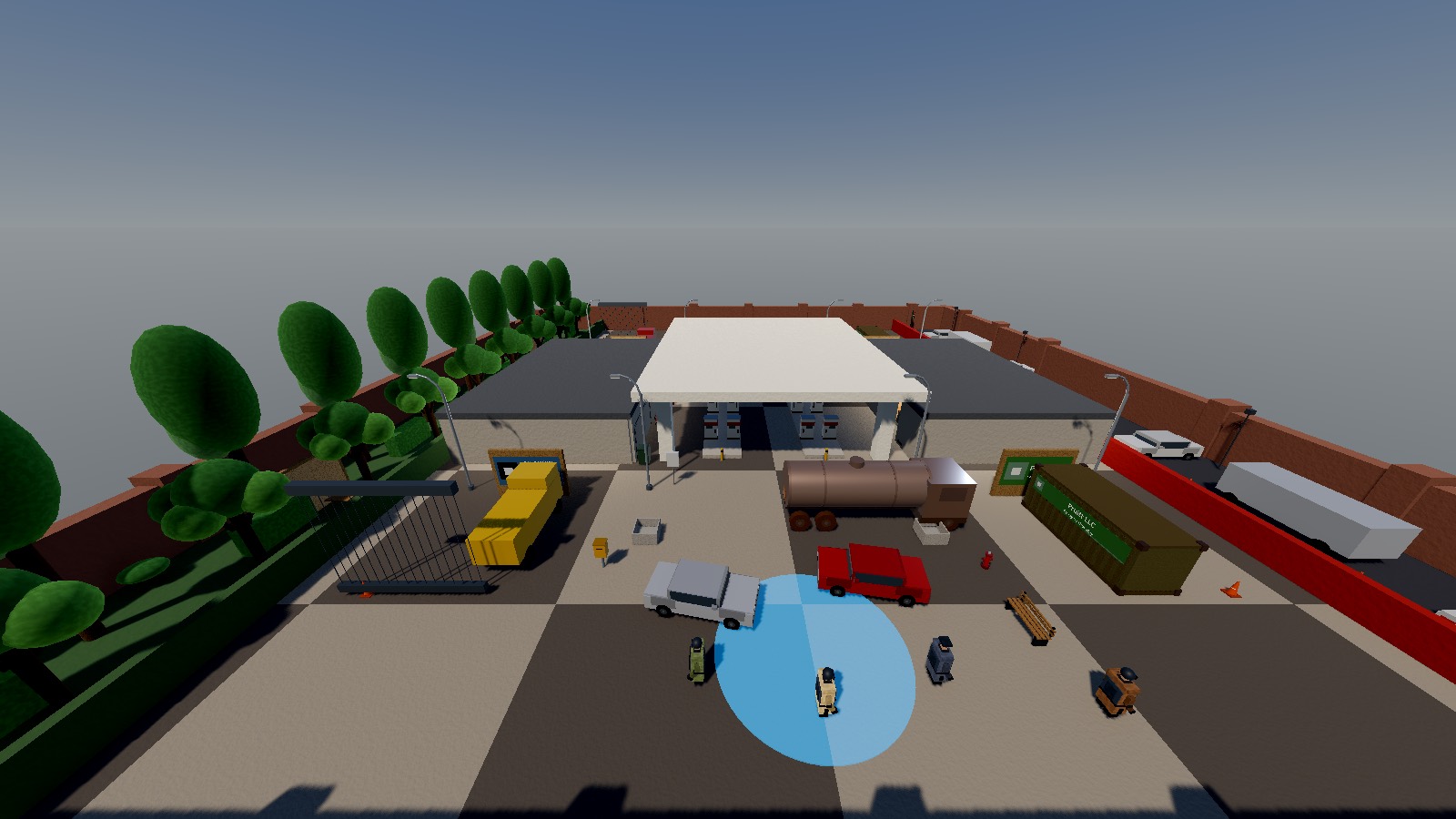
Rounds, not respawns
VORHALT is a round-based multiplayer shooter of the kind that existed at the start of the 2000s: two teams, one life per round. Die and you are out until the round ends, watching. That makes every corner matter and every mistake expensive — and it is why two minutes of one round can beat a whole evening of endless respawning.
Before every round you buy your gear with money from the last one. Modes: plant or defuse the bomb, rescue hostages, escort a VIP, or break out. If players are missing, bots fill in — at four levels, from forgiving to nasty.
- Modes
- 4
- Maps
- 5
- Weapons
- 35
- Factions
- 8
- Weather
- 24
- Props
- 539
Bomb, hostages, escort, escape
Petrol station by day and by night, market, basin, proving ground
in five classes, plus knife and grenades
four units, four invented groups, four models each
six kinds times four times of day — looks only, never an edge
as lines of text, many of them destructible
All of this exists in a first version. Much of it will be rebuilt, some of it will go again.
An early look
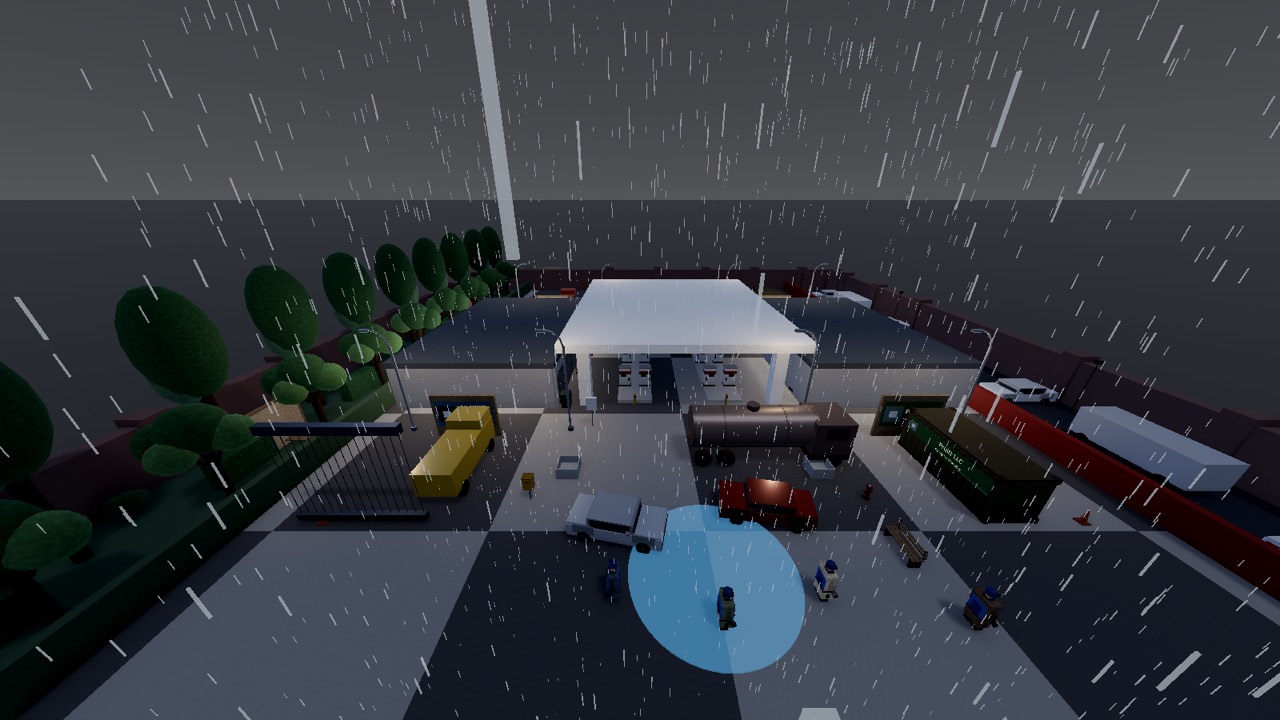
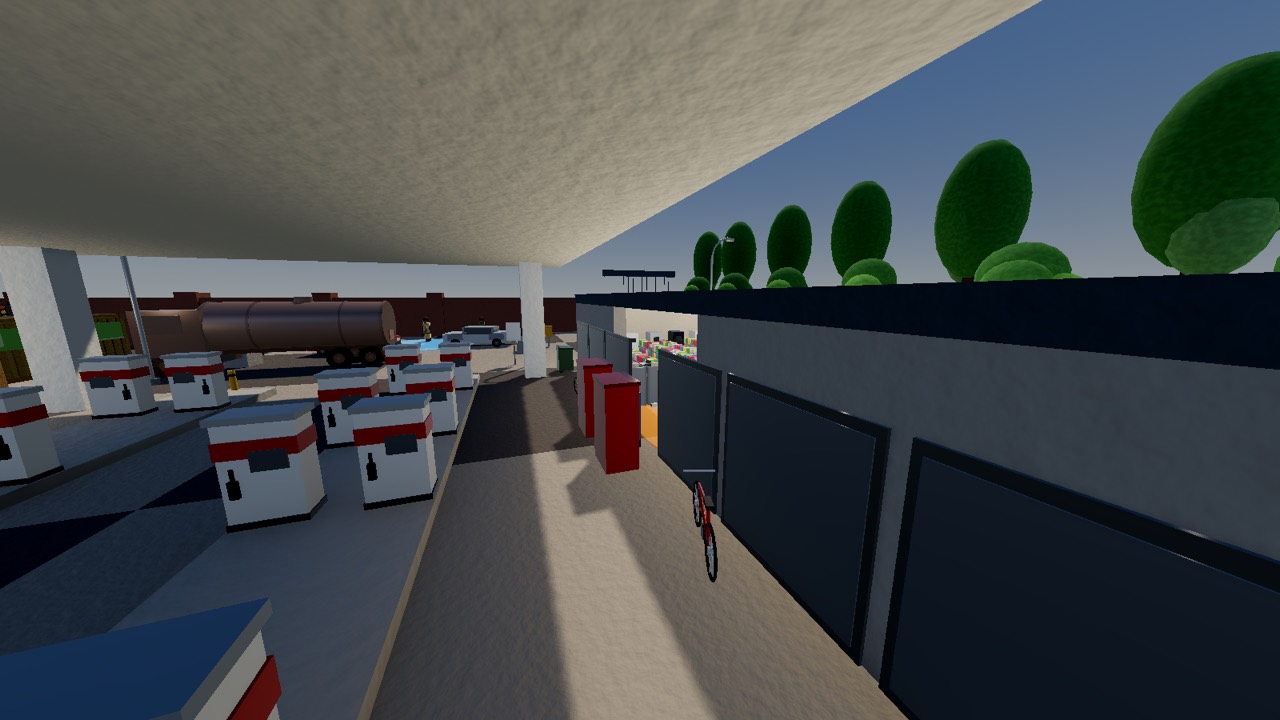
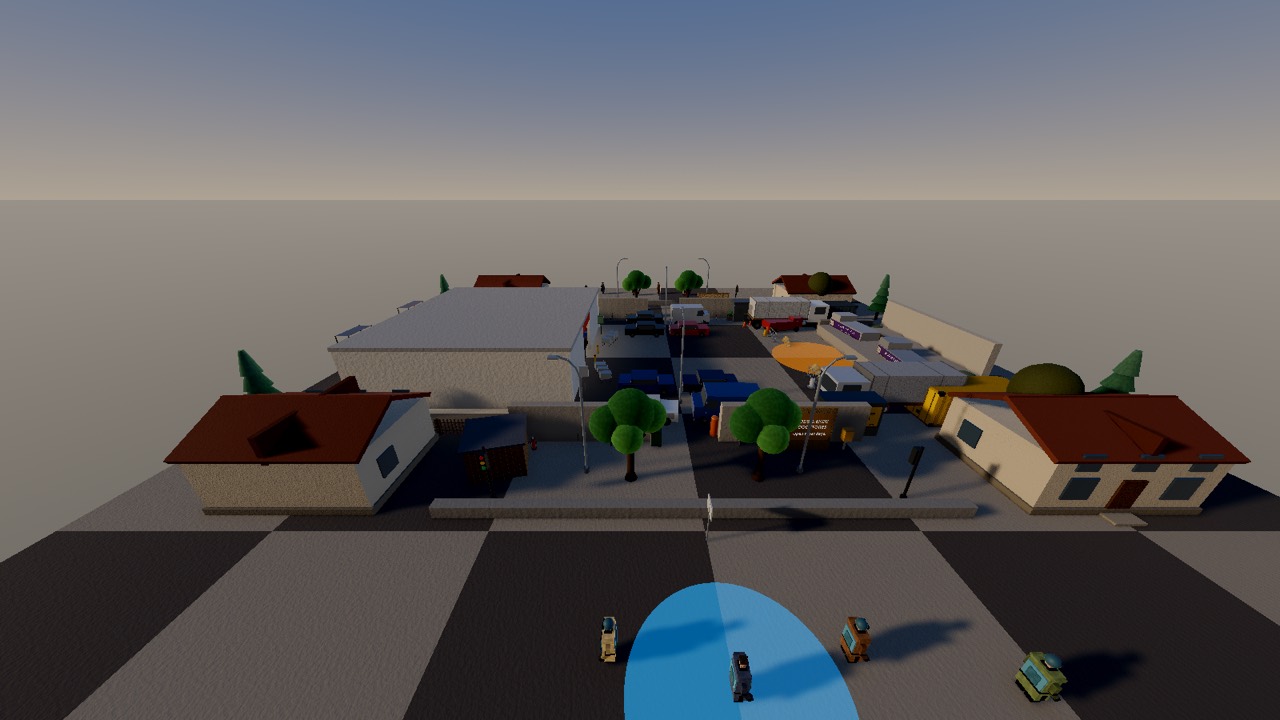
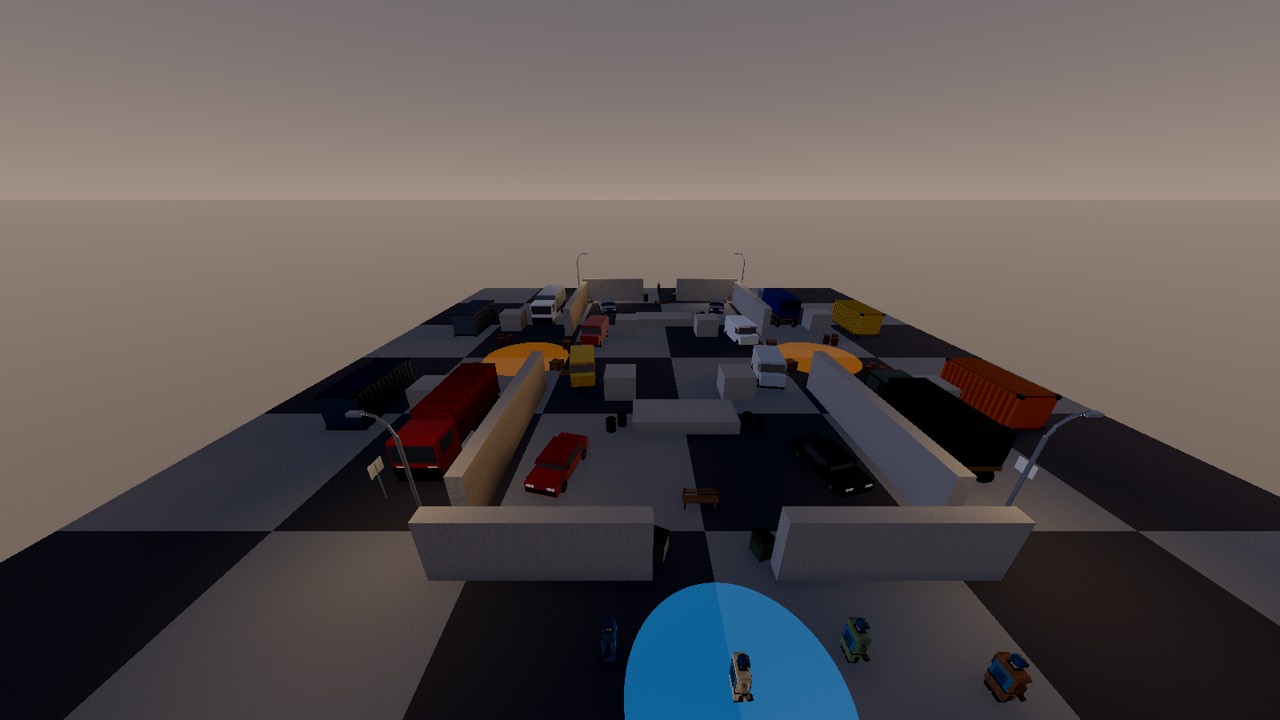
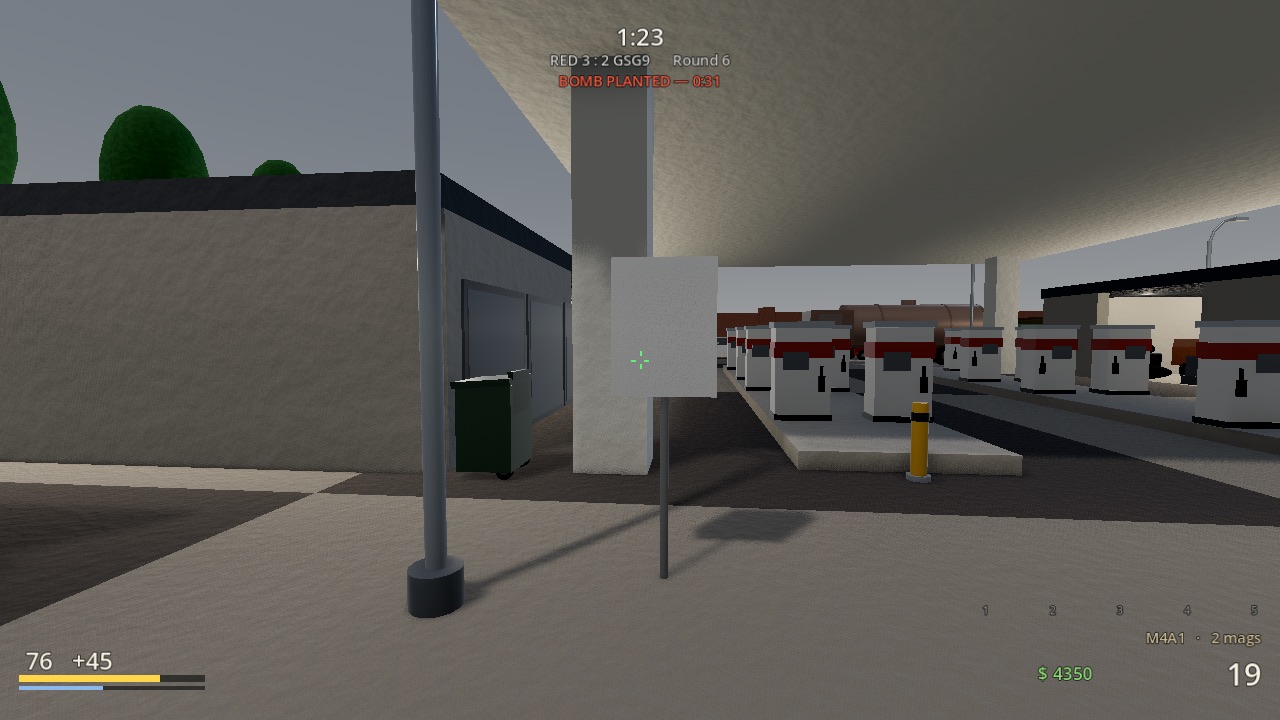
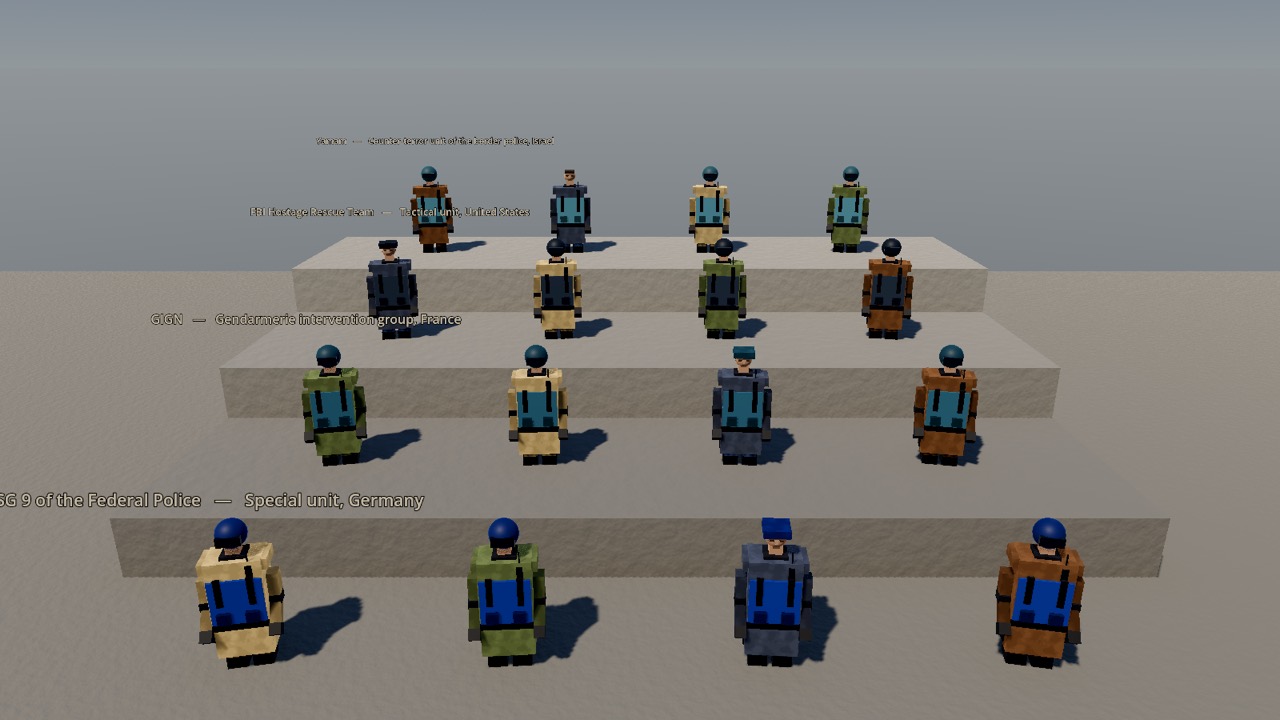
Captures from the current development build, not retouched. The graphics are deliberately basic: blocks instead of finished models, computed surfaces, figures made of boxes. The game has to be right first — netcode, hits, rounds, balance. The looks come after that.
So the pictures show where this is heading and how the maps are built — not what VORHALT will look like in the end.
What is — and what is still to come
VORHALT is at an early stage. The framework stands, and a round can be played in a small circle. Turning that into a game you could recommend to someone is still a lot of work.
There is no release date and no pre-order. Instead of deadlines there are stages, and one only counts as done once a test rig proves it — not when it feels finished.
-
in place
Foundation
Server and client from one source. Movement is computed on the server and predicted on the client; hits are rewound to the moment the shooter actually saw. Enemies behind walls are never sent in the first place.
-
in place
Playing a round
Freeze time, buy phase, round clock, side swap. Four modes, five weapon slots, crouching, aiming down sights, grenades. Bots that buy gear and pursue their objective. Menus, display, rebindable keys.
-
first version
The world
Five maps, weather and time of day, lights inside the buildings. Props that splinter, topple or burn. Animals living on the map. Invented brands on signs and billboards. All there — but all still rough.
-
first version
Ready to hand on
One run builds Windows, Mac and Linux, plus a server program for each system: one file, no window, no extra packages. Maps, props and animals ship as text files — build your own if you like.
-
in progress
Testing together
First rounds with test partners over the internet. Plus the polish you only notice there: leaner packets, smoother corrections, bots that find their way across the map instead of walking straight ahead.
-
open
The real look
The biggest job. Proper models instead of blocks, figures that move, weapons with weight, surfaces with character, sound with depth. Today's shapes are placeholders: they show where something stands and how big it is.
-
open
Polishing the game
Balancing weapons, prices and maps until a round feels right. That takes many evenings with real people — no calculation replaces it.
-
open
Open to everyone
The public server list, finding servers on your own network, a lean access service. Then the game can be downloaded here — free at first.
-
later
One price, once
Once the servers are full, VORHALT will cost money once. No subscription, no shop inside the game.
- Engine
- Godot 4
- Systems
- Windows, Linux, Mac
- Distribution
- Direct, no store
- Price
- Free first, one-off later
Don't aim where he is
„Vorhalt“ is the German word for leading a moving target: you don't aim at where the other player is standing, you aim at where he is about to be. The bullet needs time, the enemy doesn't wait — get that feel and you hit. Aim behind him and you hit the wall.
The edge is learnable, not purchasable
Under sustained fire every weapon climbs along a fixed pattern. Fixed means: the same for you as for everyone else, the same every round, the same after every update. Learn the pattern, pull against it, and you land your shots at thirty metres. It is the only advantage this game lets you build — and no shop sells it.
Everyone starts with the same thing
Nothing in this game makes you stronger because you bought it, unlocked it or pulled it from a crate. Weapons and models are open to everyone from the first launch. What is left to tell players apart is what they can actually do.
What there isn't
- Loot boxes and crates
- Battle pass and unlock tiers
- Subscription or season fee
- Paid advantages in a firefight
- Daily quests, streaks, login rewards
- A matchmaking queue
- Advertising IDs, behavioural profiling, data resale
What there is
- Every weapon and every model, from the first minute
- A server list with ping and map
- Your own servers, basement ones included
- Mods and your own maps
- Fixed, learnable recoil patterns
- An account, purely so you can join a server
- Later a price. Once, not monthly.
No matchmaking. A list.
No system decides for you who you play against tonight. You see a list, you see the ping, you join the server where the people you know are. A regular haunt instead of an assignment.
Anyone who wants to run one needs no permission: the server is a single file for Windows, Linux or Mac, with no window and no extra packages, and runs on any rented machine. An operator may even switch the access check off — those servers simply don't show up in the public list.
| Server | Map | Players | Ping | Check |
|---|---|---|---|---|
| Feierabend Stuttgart #1 | station | 14/20 | 11 | on |
| LAN-Keller Ostfildern | market | 9/16 | 8 | on |
| Nachtschicht 24/7 | stationrain | 20/20 | 24 | on |
| Werkstatt — nur Freunde | basin | 3/12 | 31 | off |
| Übungsserver Vorhalt | proving | 2/10 | 14 | on |
For everyone who had this once
It is meant for people around thirty to forty who lived through all of it once already: the server list, the regular server, the same names every evening, and a game that was finished on the day you bought it.
And just as much for younger players who don't want to slide into subscriptions, be measured, or be kept busy by mechanics whose real job is holding on to them. You don't have to be forty for that. Being fed up is enough.
Why I am building this
I wanted to know whether I could. Mai Digital is my after-hours project; so far that meant browser games. A multiplayer shooter is another matter entirely: net code, prediction, lag compensation, running servers, an access service of my own. That is the part that appeals to me.
The other part: I wanted a game whose programs and servers belong to me. Not to the platform it happens to sit on, and not to a rulebook that looks different next year. If that means it takes longer — fine.
Steffen Mai, mai-digital